
Time baffles me. I simply cannot understand how one day passes into another one. For years now, I’ve thought that time is the most mysterious of our experiences, but now I understand that being a parent means having to acknowledge something even more perplexing than whatever time is: to bring a birth is also to bring one more death into the world…

Jakob, my youngest son, had just come upstairs to show me a drawing he’d made of a shark. When he’s not drawing he’s writing, fan fiction mostly, though he wouldn’t call it that. And he knows all sorts of statistics regarding the bite force of the various apex carnivores that populate his stories. After we spoke about the shark, which was actually a hybrid between a great white and a vampire – the fins are folded across the shark’s chest like Dracula asleep in his coffin – I returned to what I’d been reading: Janwillem van de Wetering’s The Empty Mirror, a memoir of the time he’d spent in a Zen monastery in Kyoto as a young man. The book had recently arrived in the mail from Amazon, but the first time I’d read it was about a year after it was published in English in 1973. I’d borrowed it from the public library in New Hamburg, the small town in southern Ontario where I grew up.
⦾ ⦾ ⦾
I’ve decided to approach Buddhism again because a counsellor has suggested I take some meditation classes to see if they’ll help with my steadily increasing anxiety. Medication doesn’t seem to be doing much anymore. And I continuously stumble with cognitive therapy.
After years of worsening short-term memory problems, insomnia, and seemingly insurmountable anxiety, I’ve finally seen a neuro-psychologist who gave me an extensive series of tests that resulted in a diagnosis of NVLD (nonverbal learning disability), something he explained to me as being “a developmentally based disorder that is often associated with deficits in nonverbal communication and perception.” Apparently, I’ve “historically compensated” for these weaknesses by relying on verbal skills. People with NVLD are often clumsy, and find spatial learning difficult. We experience acute anxiety, inexplicable mood shifts, and find it hard to “adjust” to social difficulties. Given to obsession, we also consider the environment to be intrinsically threatening. We’re susceptible to depression and are prone to substance abuse. Little is known about the disability because it’s only recently been acknowledged, but it’s theorized that it might grow more intense as one ages.
⦾ ⦾ ⦾
While there are parts of the Van de Wetering memoir I remember, there was nothing familiar about the particular scene I’d been reading when Jakob came into the room: the author was trying to control his anger after being rebuked by a master while working in the monastery’s garden. What’s impossible for me to grasp is that, between my first and second time encountering the sentences in this book, more than forty years have passed. What I’d like to know now is what my younger self would think if he’d been able to look up from the library book in his hands and have loose access to the man he’d somehow become. If I could have him shift from that long-gone, fraying chair (that went to his bedroom because it was no longer needed by a deteriorating grandparent) to the one in this room in Saskatchewan, a chair that came from IKEA, what would he think?
After doing a quick mental probe, he’d immediately ascertain that he hadn’t become enlightened. How was this possible? What had interfered with those plans to emulate Van de Wetering and go to Japan immediately after completing high school and stay there until achieving satori, something that, according to the memoir, the young Dutch man had (inexplicably) failed to accomplish? But before he, the younger me that is, could register disappointment in his spiritual state, remove the bad taste from his mouth, he would have to take in that he’d become a father, and did the child’s very long, blond hair mean that his mother was Scandinavian?
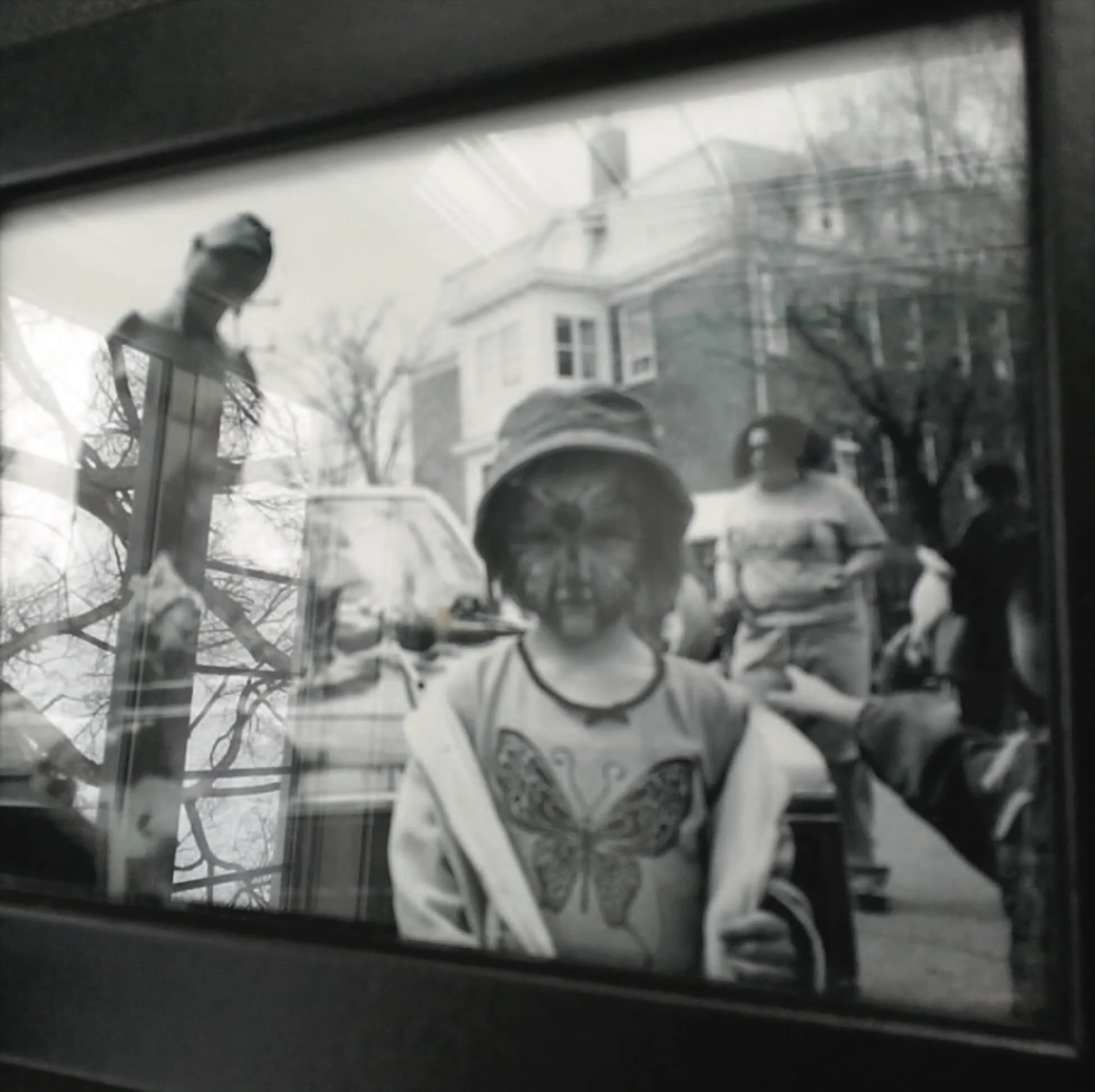
Looking around the busy sunroom, this younger self would see that books have remained important. There are hundreds of them, in shelves and piled on the floor. Literature (poetry mostly), others on ecology, art history, philosophy, five or six concerning addiction, and an entire bookcase devoted to the Holocaust. Art postcards on the walls, binoculars on the desk facing a wall of windows, and a large photograph of a woman’s bare feet with the words welcome home painted on her toes. A stationary bicycle. Oddly, a few Polaroids. That both rooms are painted the same yellow is uncanny (not that he’d use this word) – on the one hand, it feels exactly right, but, on the other, it’s slightly disturbing: don’t one’s tastes change or develop over time?
Instead of the large, classical Buddha statue he’d once owned, there’s a very small one almost entirely obscured by a tarantula fern. Also a small Bodhisattva, painted with what appears to be pink nail polish. No plastic milk carton storing LP records. And what’s with the antique dolls? A half of a lemon that seems mummified, nestled beside a cactus, and stranger still, a few things inside Ziploc bags taped against a wall: what’s left of a flower (he wouldn’t know it’s a five-year-old souvenir from an evening stroll down Nieuwe Keizersgracht in Amsterdam); the darkening claws of a bird that once struck a window. A finely detailed toy camel has been cut in half in its middle, and both parts glued to the wall. If you look at the back part of its torso, it appears as if the animal has exited from the house, but at the same time, only a finger’s width away, the neck and head, forefeet in mid-stride, have just emerged seemingly from another dimension on the other side of the wall and entered the room again.
And yes, there it is: what’s now a very old scar, left over from when, only the week before the teenager had started reading the Van de Wetering, he’d lit a match and watched it burn out on the skin of his left hand. There are other scars about whose origin he won’t know. There was no Internet when he was in his/my early twenties, so he had to discover cutting on his own. There once had been a few case cutters left over from working nights in a grocery store.
⦾ ⦾ ⦾
The teenager’s Buddha statue only exists in the photograph to my left, animage showing a slightly shattered statue in an open suitcase. My father was decluttering, and he decided to bring me the statue that I’d stored with him, but, silly man, he packed it with socks and underwear, and then had it go through normal luggage on a flight from Ontario to here about five years ago. Now there’s a concrete instance of the transitory nature of reality. To me, the photo is a finely compressed detail that speaks of Dad slowing down, being inattentive, and the picture is also a nicely goofy setting for this statue, one that could even stimulate its own koan: instead of concentrating on the face you had before you were born, hold the thought of a fairly shattered Buddha in a suitcase along with the socks and underwear of a 76-year-old and see what this tells you about emptiness and its vicissitudes.store.
⦾ ⦾ ⦾

Wikipedia tells me that Van de Wetering died over a decade ago, as a man nearing 80 in 2008. After publishing the book on Zen in the 1970s, he’d made a career writing detective fiction, eventually leaving the Netherlands for the States, though he did revisit his youthful sojourn in Kyoto, turning out another memoir in 1999, this one called Afterzen. From it, and an interview online, I’ve learned that one of the reasons he initially turned to Zen was his confusion over suffering and evil: only after the war did he learn that the teenage boys who had disappeared from his school in Rotterdam had died at Treblinka. I also learned that booze had been a decades-long companion until his wife had put her foot down. When I’d originally read Van de Wetering, he was in his early forties, and he had over thirty books yet to write. Apparently, he’d maintained his meditation practice more or less and did it in the proximity of a small altar he’d made, decorating it with Dutch seashells to remind him of his childhood and also some plastic dinosaurs to keep the idea of extinction directly in front of him. I’ve never gotten much out of detective fiction, but I’m half-tempted to order one of his mystery novels. Someone who decorates a homemade altar with toy dinosaurs is likely to be good at nestling surprising details inside his fiction: small gems that coalesce around how the world appears perhaps only to him.

⦾ ⦾ ⦾
A red-breasted nuthatch has just flown off with a sunflower seed from the feeder two stories below. I put out seeds all year, even during the summer. The bird may be the one who waits for me in the early morning when I replenish the feeder. Often we’ll look at each other, only an arm’s lengthapart. Almost all birds appeal to me, but I’ve wondered for years why this specific species gives me a particular dopamine rush. It’s precognitive: as soon as I even remotely register the grey-blue feathers of the bird, its eye stripe and black beak, it seems as though my hypothalamus is flooded with not only simple equanimity, but euphoria as well. For years now, I’ve wondered why one of these small creatures triggers these emotions. I’m unsure, but through meditation practice, I think that I may be getting closer to the cause. Feelings are so bizarre. While they seem to arrive as contemporaries of the present, a reaction to immediate circumstances, they may in fact be very ancient, far older than anything we can consciously identify.

I’m lousy at meditating and suspect that decades of anxiety (among other things) have torpedoed the tissues in my brain … but here’s the thing: back when I was reading The Empty Mirror and planning on going to Kyoto, I used to take long winter walks along a nearby frozen river, hike through the forest that followed its contours. Recently, during sessions of regular, extraordinarily difficult, breathing exercises, I’ve found that unusual images suddenly veer toward my unanchored mind, some bizarre – Michael Jackson’s face during plastic surgery shot by on one occasion – but other images seem to arrive from my own deep past, showing memories that have been lost for decades. Sitting on a dock as a child about to try water skiing for the first time, the waves making my feet move up and down, everything as if filmed by a parent, but ordinary people didn’t have the technology to record anything back then as we do now. Gene Simmons spitting blood on a stage from the one time I saw KISS. Eventually, a recollection from one of those walks along the forest by the river came into view. In it, snow is everywhere, deeper than my knees, and thick tufts of it are on the trees. In this memory, I watch myself stop walking and turn around to look behind. There’s a bit of snow falling from some kind of pine tree. A grey sky. I can’t say for certain, but upon repeated viewings of this scene when I’ve been observing breaths for a half hour or so, I’ve wondered whether I didn’t turn around because I heard the singular sound that a long dead white-breasted nuthatch once might have made. And within that sound, I felt a sense of well-being that nestled somewhere inside and then seemingly vanished beneath the subsequent decades that happened next. I’ll never know for certain if there actually was a nuthatch (though I do know that I have to struggle to keep references to snow out of the poetry I write). And I know that birds aren’t here to provide us with spiritual sustenance. It’s simply that some things went right in my life after those moments in the snow; many things went right, and some other, different things began to occur very shortly after reading Van de Wetering; some habits began that distracted me from the ambition to travel to Japan.
⦾ ⦾ ⦾
But what’s staying with me now is a detail of which I have no recollection in Van de Wetering’s story. The ship that took him to Japan docked briefly in Bombay where he went ashore to be surrounded by beggars, their number surprising him. “The hunger we knew in Holland during the winter of 1944/45,” he says, “seemed to be a normal and permanent phenomenon here [in Bombay].” While there, a sailor told him that there was a brothel where women were kept in cages and, to his credit, Van de Wetering caustically asks whether it would make any difference to either the beggars or these women whether a clever young man managed to gain enlightenment after spending a year or so in a monastery. I note that he doesn’t call these caged sex workers prostitutes but the Dutch word translated into English tells me that he thought of these people as women. I don’t have the slightest inkling of what this passage meant to me when I first read it. Van de Wetering had these temporary misgivings in 1958, en route to Kyoto, and eventually I read and then forgot about them during the 1970s, but today, I can’t help but wonder whether any of these people, peripheral to the memoir, are still alive today, more than sixty years after that stop in Bombay.
Imagine the trajectory of their lives. If we’re honest, we’ll admit we can’t. To ask what happened to only one of the beggars that Van de Wetering saw, or stood next to, is to recognize the vastness of oblivion and that almost all human experience is evanescent and cruelly unknowable.I don’t know how to confront this fact, except to put it like this: while I was burning incense, reading The Empty Mirror for the first time, listening to Deep Purple’s Machine Head, and going for walks in the snow, I had no idea that the Khmer Rouge was beginning its policy of genocide in Cambodia.
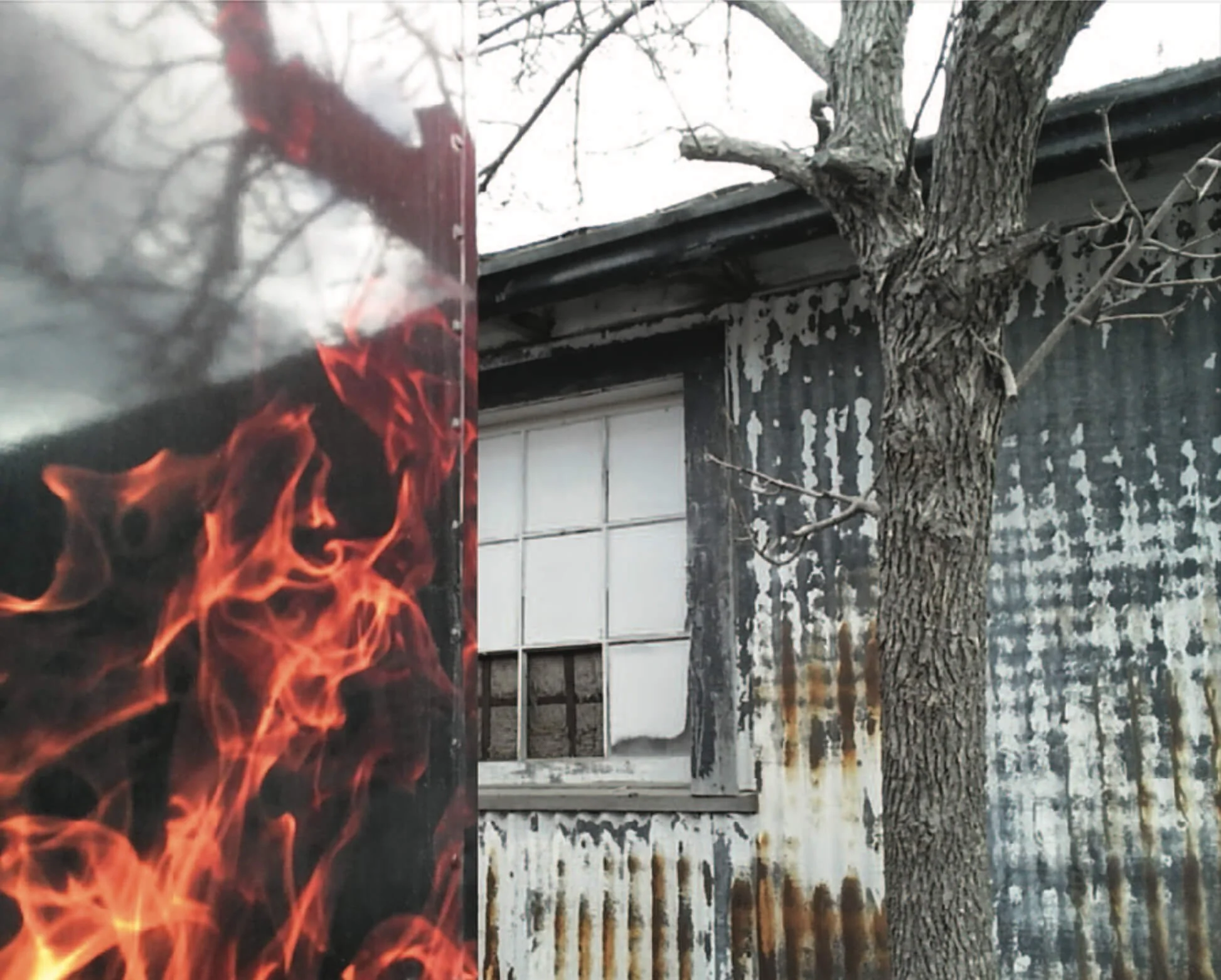
Contained in a heavy cardboard box, Ben Kiernan’s history of the Pol Pot regime has recently arrived, and this is one of the books my previous self would have noticed if I’d been able to transport him from the first reading of Van de Wetering to the second. But I have no sense as to what reading the Kiernan will actually mean when I finally find the time to start the book. I’ve been to Auschwitz, Mauthausen, Westerbork, and Dachau. I’m fairly certain that I’ll never go to Cambodia’s killing fields.
⦾ ⦾ ⦾
Time baffles me. I simply cannot understand how one day passes into another one. For years now, I’ve thought that time is the most mysterious of our experiences, but now I understand that being a parent means having to acknowledge something even more perplexing than whatever time is: to bring a birth is also to bring one more death into the world.
⦾ ⦾ ⦾
According to Armstrong™ (Canada’s Premier Bird Food), its product named Persistence (a blend of quality seeds, nuts, and dried fruits, including pineapple) is “wild bird food for woodpeckers, nuthatches and other hardworking birds” (my emphasis). Neoliberalism in bed with John Calvin.
⦾ ⦾ ⦾
A few facts and questions that must interrupt this essay:
My blond son’s mother isn’t Scandinavian; her heritage is Ashkenazi.
When I was a child I could make snow forts out of what was left after a plow went down the road, and these forts would be higher than my father. My sister (who still lives in the area) tells me that there’s rarelyany snow on the hills where we used to go tobogganing all winter. It rains more than it snows. She puts it down to global warming.
Before this past early spring, a catbird had never visited our backyard, but today, one has. Using my binoculars, I follow this new arrival as it searches for seeds … the black, grey, and red on his body summon something deeper than ink, a sky of the thickest rain, and a piece of red felt that’s rarely seen.
Jakob has two large overflowing plastic boxes of dinosaurs tumbled in disarray. Each toy a perfect replica of a specific species. A large collection of plastic toys that have been made of polymers that have made the long journey from China to his bedroom.
Jakob doesn’t know about refugees dying in the Sahara or children walking from Guatemala to the United States, but one day he’ll be forced to confront the reality that while he’s been writing stories about dinosaurs, Joy the murderous Clown, and also before, when he was teaching himself how to draw by creating hybrid sharks, another extinction has been happening – in the oceans and rainforests that are so far from the Canadian prairies, and everywhere else too, including Saskatchewan’s grasslands – and there’s nothing he can do about it. Extinction is a word no one can accurately understand: it may be an indifferent volcano; we might force ourselves to its rim, but who has the courage to look down into what’s beyond the edge?
Will Jakob know food insecurity in his old age as Van de Wetering experienced in his childhood?
How will he eventually remember the climate strikes we went to when he was eight, nine, and ten?
Can anyone doubt that our children will look back on us with incomprehension and likely an abiding sense of contempt?
Dinosaurs once were real and knew nothing of us, and we’ve put them in movies and museums, but what’s most important today is that together we’ve made fossil fuels.
MICHAEL TRUSSLER has published award-winning poetry, short stories, and creative non-fiction. He teaches English at the University of Regina.
This essay is for Jakob Snider. I would like to thank Philip Charrier for his helpful advice in composing this essay.
