
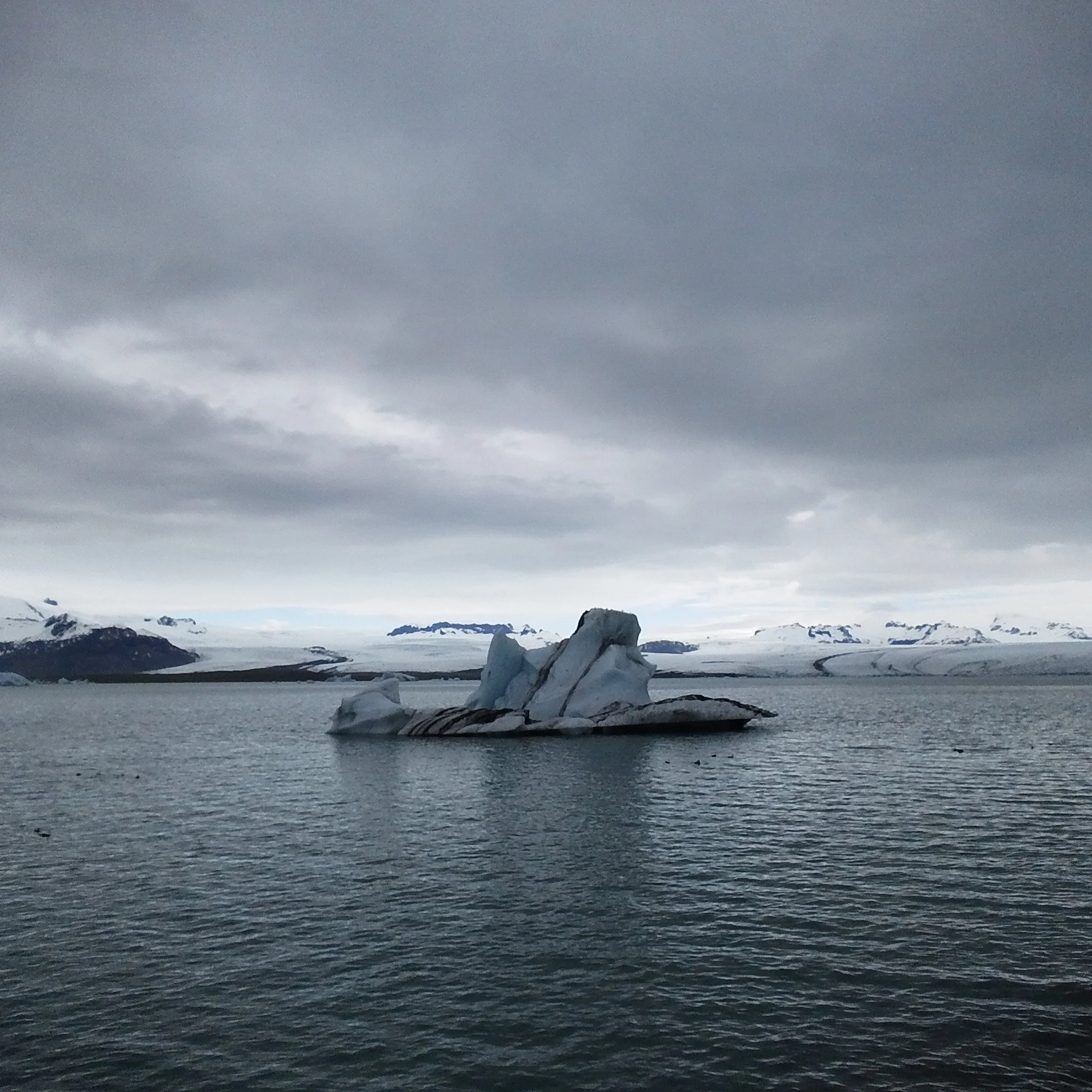
A number of years ago, I came across Gary Snyder’s description of what underlies his writing and daily life: “A key term is practice: meaning a deliberate, sustained and conscious effort to be more finely tuned to ourselves and to the way the actual world is.” I read this sentence from The Practice of the Wild and circled the individual words deliberate, sustained and conscious, grateful to find them during an early July morning, not far from Mount Robson in British Columbia. These words may seem simple to some, but they suggested something crucial to me, living as I was in a state of near chaos, caught in a rapidly accelerating anxiety that I was attempting to ameliorate by alcohol. It would be months until this insane way of living peaked and I fell apart, suffering a kind of breakdown. I wish of course that I’d been able to take Snyder’s wisdom to heart before this catastrophic collapse, but I didn’t, though now I’m closer to maintaining the slow discipline to which he’s referring.
I read Snyder’s book nearly a decade before I was diagnosed as being autistic, and I’ve since learned that autists seek / discover patterns. Deliberate, sustained, conscious stayed with me, though, and now several hundred books later I’ve been delighted to encounter a few other writers who make a (generally philosophical) point by accentuating three ideas, very often expressed in only three words. Describing how certain disabled people deliberately respond to others staring at them by refusing to look away, Rosemarie Garland-Thomson observes that these people “put to work a three step process of visual activism: look, think, act.” In her essay “Setting Free the Crabs,” Barbara Kingsolver mentions that she tries to “teach [her] children to love nature as [her] parents taught that reverence to [her]—through example, proximity, and plenty of field guides and age appropriate biology books.” What captivates me about these miniature lists is that each condenses a complex, though interrelated, ethical stance. In a disciplined tumble of 3s.
While being deliberate about and conscious of a task seem similar, they’re actually not because deliberate effort expands upon and renders more intricate what consciousness actually is. Anxiety and substance abuse kept me blurred in the moment for decades, as if on a merry-go-round, whereas sobriety was getting off the frantic whirl of addiction to stepping out of the woods and looking into a vast field of snow; a long way in the distance you can see trees, their branches nearly tendrils that open up to a whitish sky. The air is cold rather than feverish and humid. It’s important to add I find it difficult to maintain Snyder’s trio of words, though I drink very rarely. It’s terribly easy, though, to collapse into the franticfrantic maelstrom of anxiety. It’s perhaps not surprising that working at this internal discipline engenders an ethics that goes beyond personal self-improvement. Being more attentive to “the way the world actually is” may or may not result in one becoming more kind, but it certainly makes suffering and finitude more apparent, whether these sources of pain involve the natural world or that of people.
Kingsolver’s essays very often have a subtext of how one should be a responsible parent and they always contain an ethics. That one must embody the ethical stance one is attempting to inculcate in one’s children is readily apparent. Proximity is more beautiful. Both require effort. If children are quick to notice adult hypocrisy, they require sustained proximity to the natural world. Not simply a weekend camping, but an ongoing immersion: hiking in new and familiar places, learning to recognize a Swainson’s thrush from a distance by the way it walks and the time of year. Being thrilled by colour when it’s part of something alive. And this opens up the complexity of Kingsolver’s resolve because she’ll likely never know the degree to which her children benefited from being exposed to Arizona (in her case) just as I’ll likely never grasp the extent to which my youngest son took in the unfamiliar birds we encountered along the southern coast of Iceland earlier this year. He certainly knows not only the utility of field guides but also their magical quality—they’re sturdy machines of representation that combine image, map, text, each relying on a marvelous capacity for particular-abstract thought.
Garland-Thomson’s “look, think, act” is a more obvious imperative to ethics, but it also embodies a sensibility that parallels Snyder’s, though it’s more complicated. What do the activities of looking, thinking, and acting actually entail? People will respond variously, but I find each to be tricky, and very often exhausting. Rilke’s remark in The Notebooks of Malte Laurids Brigge that has the narrator say “I think I should begin to do some work, now that I am learning to see” suggests the difficulty of moving beyond looking-as-glancing-skimming to taking in the intricacy of reality. And that artistic development is incumbent upon gaining this skill. Garland-Thomson also reminds us of Walker Evans’s advice to aspiring photographers but to the rest of us as well: “Stare, it is the only way to educate your eye, and more. Stare, pry, listen, eavesdrop. Die knowing something. You are not here long.” Western culture most often confers value on socially-validated activities or quantifiable acquisitions. Evans obviously goes against the grain: what is important is to gain a knowledge of something, and it seems pertinent that he doesn’t seem to care what this something embodies. Given his repertoire, this something could range from a sharecropper’s face to the stripes on a barber’s pole. Have something of reality register. And memento mori. That Garland-Thomson places the word think after look would seem to suggest that the second activity easily follows the first, but this isn’t remotely the case. Again, how people experience the sensation of thinking (rather than merely reacting or associating) must vary, but to me it is both energizing and enervating (my mind feels clean in some way during thinking, and thinking is hard, hard, hard). To clear the mind of its normal candy floss blur of imprecise opinion, jittery reactive emotion and monotonous associations from the past demands effort. It can result in feelings of guilt, and enormous self-doubt. It can confer delight.
But Garland-Thomson goes further. It would seem that these visual activists to whom she refers openly require those who stare at them to actively reconfigure their sense of what it means to be a human being, to be a singular person rather than a category. Visual habits need to be subject to critique, and the eager sloth of voyeurism needs to be corrected. What, then, is action? As a kind of mini-manifesto, this trio of words announces an ethical project but doesn’t offer a precise plan of what it means to act as the result of knowledge. Garland-Thomson herself glosses this point by saying that grasping the power dynamics of staring “primes people to act in new ways: to vote differently, to spend money differently, to build the world differently, to treat people differently, and to look at people differently.” Fair enough, at least initially, but this isn’t all that helpful. It is rare for me as a voter in Saskatchewan to even have the option to vote on an issue that would result in the sort of politics Garland-Thomson envisions. One can contact politicians to inform them of issues that are important certainly, but my experience is that doing so doesn’t alter much, except perhaps at the municipal level. Certainly, the admonition to spend money differently makes sense by charitable donations; however, it isn’t at all clear to me how the process of look → think → act can result in building a better world, a nebulous, though well-intentioned project.
But this isn’t my point. What compels me is the pattern—from Snyder to Kingsolver to Garland-Thomson—to distill a primordial ethics out of 3s. By no means am I suggesting that using this triad is all-encompassing—after all, Evans offers a compressed list of 4 activities—but, as someone with ASD, this repetition of 3s seems to be an enchanting philosophical echolalia.
A collection of 3 anything is golden—from the photographer’s rule of thirds to the Trinity—which implies that favouring this particular style of grouping of phenomena is a human rather than an autistic trait. These triads are different from the list—which relishes the jagged and open-ended non-completion of its members. Here’s one of my favourites, from Thomas Nagel’s The View from Nowhere: of the human body’s chemical composition, Nagel observes: it can “be constructed out of a sufficient quantity of anything—books, bricks, gold, peanut butter, a grand piano.” What I mean by open-ended non-completion is that Nagel could have lengthened, or diversified, his list by adding another object—say, a child’s purple crayon. Gatherings of three are different because they have an intrinsic desire to be three, not two, not four or more. They have nearly a metaphysical necessity to exist as 3 that is opaque but also essential. I can’t explain why; I can only say this is the way it must be. If threes therefore have an attractive coherence to the neurodivergent and neurotypical alike, what may be autistic is the love of collecting them. Here, then, is a final offering. In Zero at the Bone, Christian Wiman characterizes the qualities necessary for a good gym, a place which must provide “[p]redictability, anonymity, oblivion.” A lovely gathering that compresses what’s needed when exercising in a public place. Though now I have a problem in having assembled a mini-essay on 3s with 4 examples. This is wrong, wrong, wrong. What slightly lessens this lumpiness is that Nagel contributes the 5th item in my list and at least that’s an odd number. Odd numbers are safer than even ones and more agreeable.